Water treatment
Reducing radon in your well water
Aeration or carbon treatment to cut radon released from household water.
Radon is a radioactive gas that forms as uranium in rock breaks down. It dissolves into groundwater, and when you shower, run the dishwasher or do laundry, some of it escapes into the air you breathe. Southern Maine and New Hampshire have a lot of granite, and drilled bedrock wells here regularly test high.
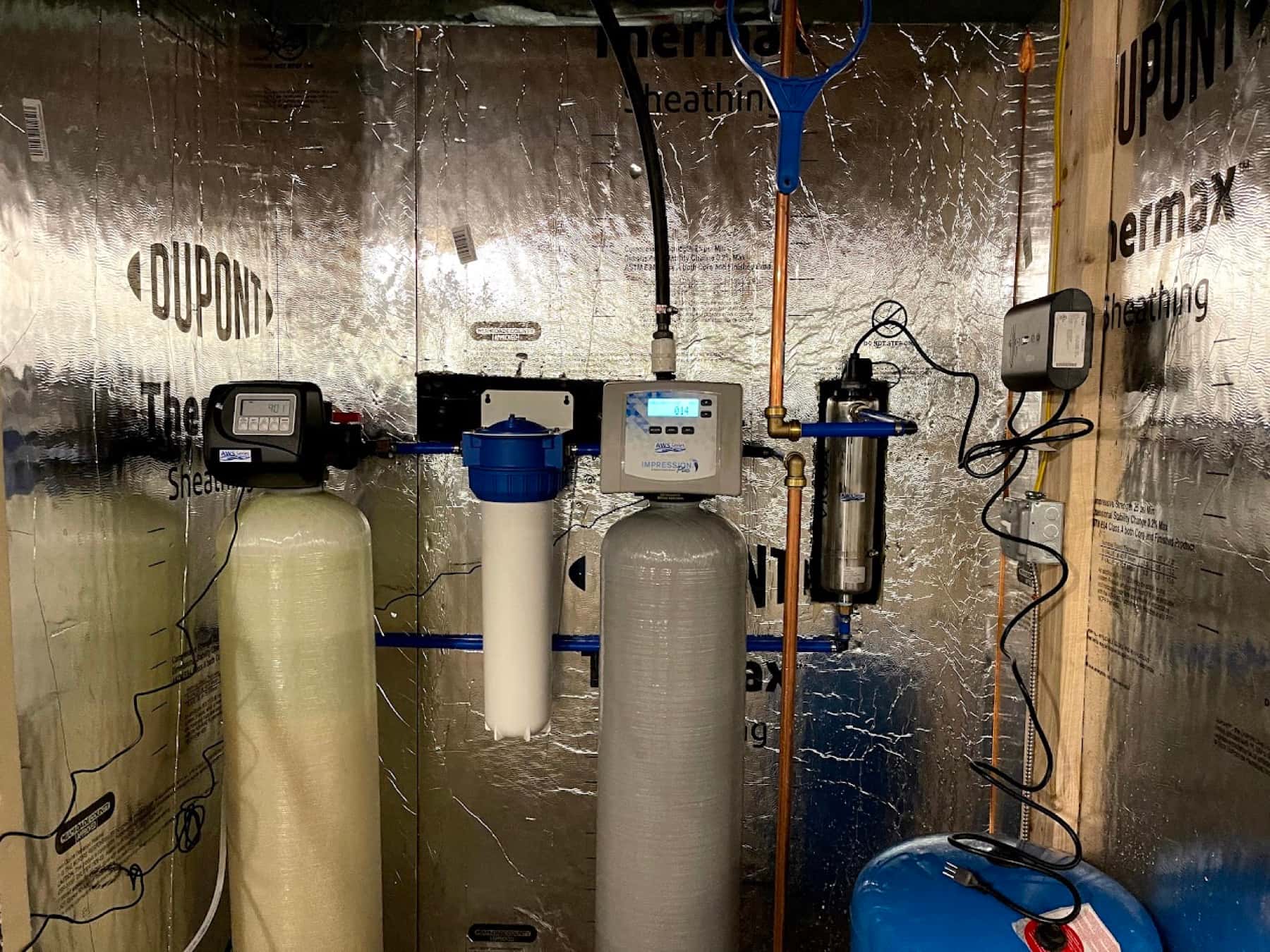
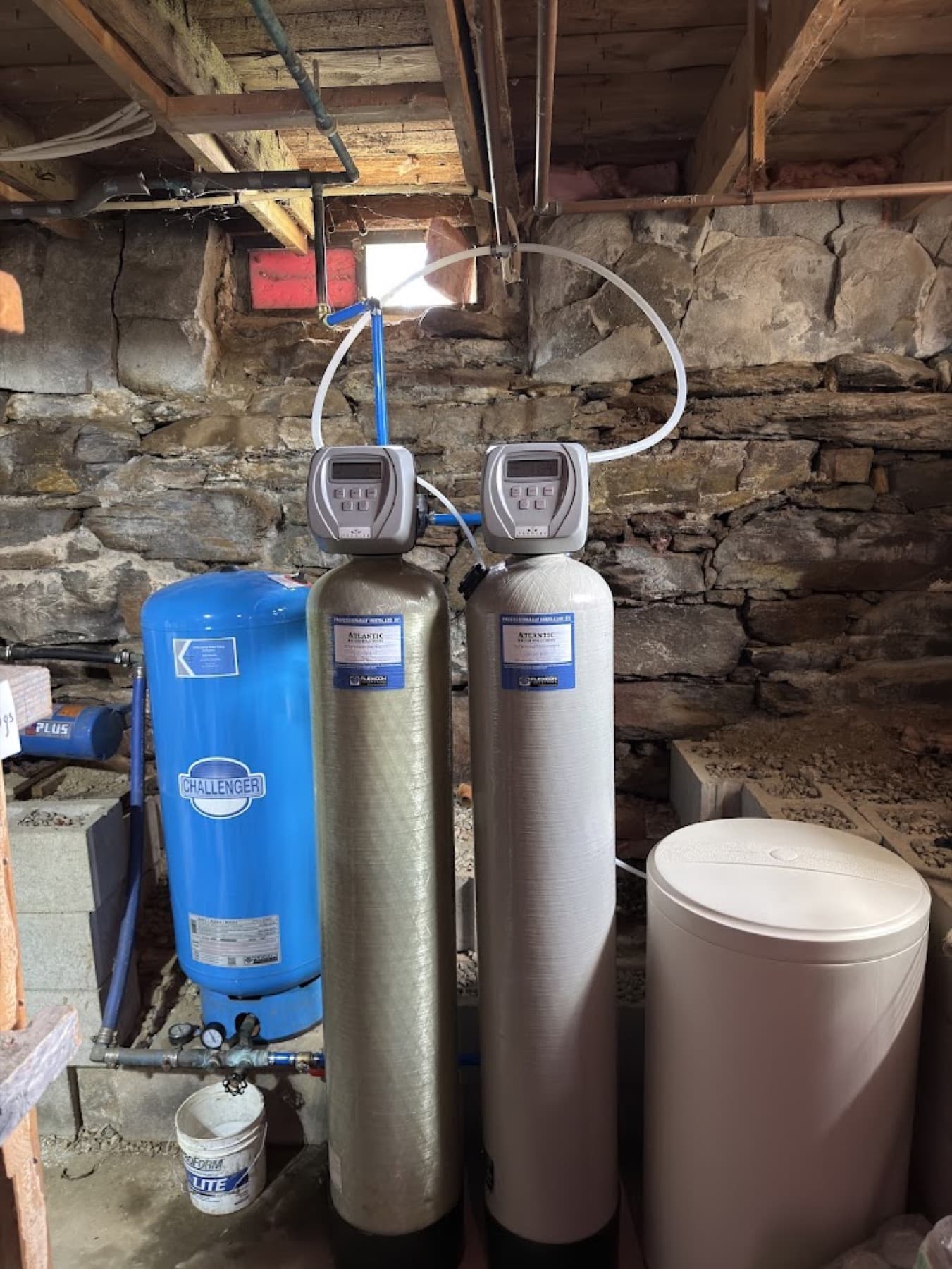
The two proven treatments are aeration and granular activated carbon. Aeration bubbles air through the water in a closed tank and vents the radon outside; it handles higher levels and does not hold radioactive material in a tank in the basement. Carbon is simpler and cheaper for lower levels, but it accumulates decay products and needs careful placement. We choose from your result and how much water the house uses.
Radon in water is not the same as radon in air. If water tests high, test the air in the house as well.
When to test and treat
- A drilled bedrock well that has not been tested
- Granite or other radon-prone bedrock in your area
- A water result above the guidance for your state
- A high radon air reading in the lower level
- Buying a house with a private well
How it works
What happens, step by step.
- STEP 1
Test the water
A radon-in-water sample taken carefully so the gas does not escape before the lab sees it.
- STEP 2
Decide the method
Aeration or carbon by result, flow and basement layout.
- STEP 3
Install and vent
Venting and drain plumbed to code, or carbon placed with attention to shielding.
- STEP 4
Verify
A follow-up test confirms the reduction.
Test the air too
Water is only one source. A short-term air test in the lowest living level shows whether you need soil-gas mitigation as well.
Questions
Common questions about radon-in-water reduction.
Do not see yours? Call (800) 696-9355 and ask.
Serving towns including Berwick, Bethel, Brunswick, Wells, Windham and more.
Is drinking radon water the main risk?
Will a softener or filter remove radon?
How do I know it worked?
Not sure what is in your water?
Start with a test. We will explain the results in plain language and only recommend what the numbers support.