

Orange stains, a metal taste and laundry that never looks quite clean all point to iron. It is among the most common complaints from well owners, and also one of the most fixable, once you know which kind of iron you have.
Three kinds of iron
Dissolved iron is invisible when water first comes out. It reacts with air and turns rusty after it has been standing in a glass or a toilet bowl. Particulate iron is already rust in the water, so it looks cloudy or flaky as soon as it comes out. Bacterial iron is produced by bacteria that feed on iron and leave a slimy orange or brown deposit in tanks and fixtures.
Matching treatment to the form
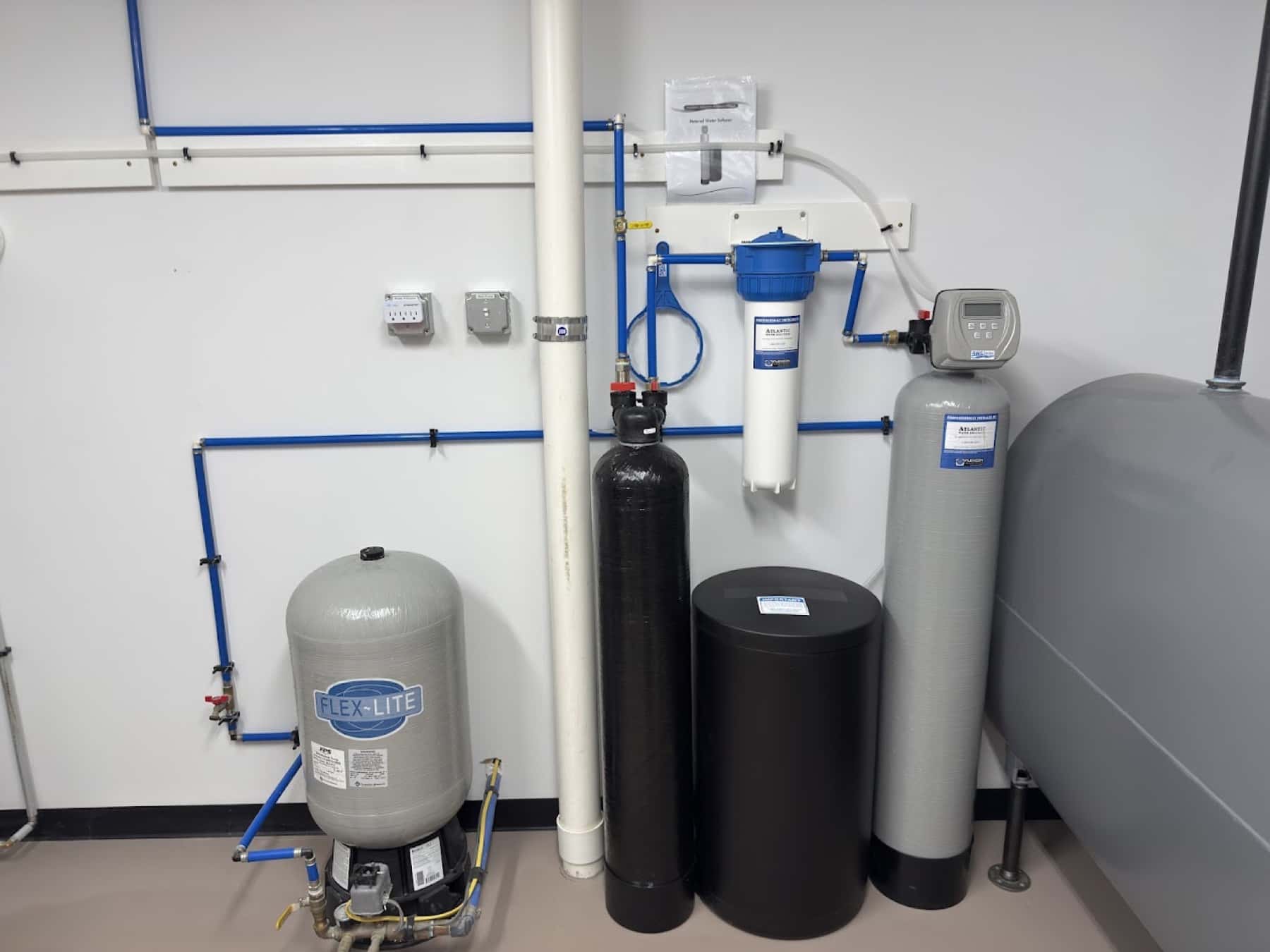
Particulate iron is the simplest: a sediment filter catches it. Dissolved iron has to be oxidized and then filtered, which is what catalytic or oxidizing filter media or an air-injection system does. Bacterial iron needs disinfection added to the process, often with a chlorine feed or by shocking the well and plumbing first.
A water softener can handle small amounts of dissolved iron, but heavy iron coats the resin and ruins its performance. If you have both hard water and heavy iron, the iron filter goes first.
- Particulate iron: sediment filtration
- Dissolved iron: oxidizing media or air injection
- Bacterial iron: disinfection plus filtration
- Iron with hardness: filter first, then softener
Start with a test
Iron treatment depends on more than the iron number. pH, hardness, manganese and sulfur affect which system works. A proper test shows what you have, and from there the choice is much less of a guess. We carry out the test, explain the result and size the system.